
GRESB Verification: What It Is and Why It Still Matters in 2026
GRESB isn't going anywhere. And for Canadian real estate portfolios, the bar is only moving in one direction. Here's what GRESB verification actually is, what's changed in 2026, and why getting it right matters more than ever
SUSTAINABILITY
4/26/20263 min read

If you manage or invest in commercial real estate in Canada, you've probably heard GRESB mentioned in the same breath as ESG disclosure, investor requirements, and sustainability benchmarking. There's often a gap between knowing GRESB exists and understanding what verification actually involves and why it matters.
Let's close that gap.
What Is GRESB?
The Global Real Estate Sustainability Benchmark is the leading framework for assessing the sustainability performance of real estate funds, companies, and assets. More than 2,000 real estate entities globally participate, and institutional investors increasingly use GRESB scores as part of their due diligence.
For Canadian portfolios, GRESB participation has become effectively table stakes at the institutional level. Pension funds, REITs, and large asset managers are either participating already or actively being asked why they aren't.
What Does GRESB Verification Actually Mean?
GRESB scores are based on self-reported data submitted by participants through the GRESB portal. That self-reported data covers a wide range of indicators: energy and water consumption, greenhouse gas emissions, waste management, health and safety practices, certifications, and governance factors.
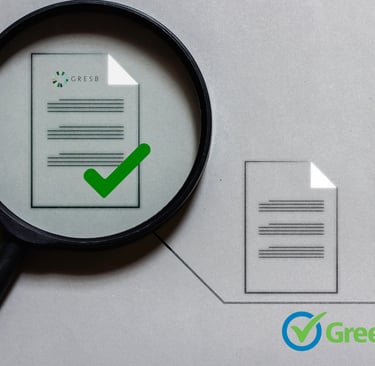
Verification is the independent review of that data. It exists because self-reported data often contains errors, inconsistencies, and gaps that affect the reliability of the score. An independent verifier reviews the underlying evidence supporting key data points, checks for consistency, and confirms that what was submitted accurately reflects what's actually happening at the asset level. Up to 5.5 Points can be earned on verification of Energy, Water, Waste, and Emissions data.
For most first time submitters, verification is out of reach. It can often be costly, and if your data isn't prepared, it can be a very consuming process. But at the top end of GRESB scoring, every point matters. First and second place GRESB participants are frequently only points apart!
What's Different in 2026
The 2026 GRESB Real Estate Standard updates continue a clear trajectory: moving from policy disclosure toward verified, quantitative performance. Outside of external data verification, a few key shifts are worth knowing:
Embodied carbon moves to scored. Beginning in 2026, embodied carbon measurement and reporting shifts from a data collection field to a scored indicator. Participants who haven't started quantifying materials-related emissions and documenting life-cycle impacts will feel this in their scores.
Net-zero indicator refinement. GRESB has strengthened the evidence requirements for net-zero targets, emphasizing credible third-party data and scenario alignment. Vague commitments won't hold up the way they once did.
Weighting adjustments. Climate risk indicators (RM6.1–RM6.4), health and safety (SE5), and target-setting indicators (T1.2, TC3, TC4) have increased weighting. Several policy-based indicators have been reduced. The signal is clear: evidence matters more than disclosure.
Building certification evolution. GRESB is reevaluating the certification systems it recognizes — LEED, BREEAM, WELL, Fitwel — with a new framework focused on scope, rigor, and data quality. Changes won't affect scoring in 2026, but a new recognition system launches in 2027. Worth knowing now.
Why Verification Quality Matters
Not all GRESB verification is the same. A verifier who is checking boxes is doing something materially different from a verifier who understands the assets behind the data.
The details matter. A commercial office building and an industrial complex have very different operational profiles, different data collection challenges, and different risk areas.
This is where GreenCheck's position within RiskCheck Inc. creates real value. We're not a standalone sustainability consultancy. We sit inside an operational EHS firm. Our team understands buildings hazardous materials, air quality, safety programs, the actual physical and operational environment behind the sustainability data. When we verify a GRESB submission, we're not just reviewing spreadsheets. We're reviewing data in context.
The Off-Season Is When the Work Happens
The GRESB submission window typically runs April through June. But the participants who consistently score well aren't doing their preparation in April. They're working on data quality, evidence collection, and program improvements throughout the year.
The period after submission closes (July through March) is when the real work happens: reviewing results, identifying gaps, fixing data collection processes, aligning with the updated standard, and building the evidence base that will support the next submission. Our team provides assistance bridging that gap between "once a year submission" to a continuous improvement model.
If your team is only engaging with GRESB during the submission window, you're permanently playing catch-up.
Getting Started with GreenCheck
GreenCheck provides GRESB verification services for Canadian real estate portfolios, independently and without reference to any prior partnership status with GRESB. We work with asset managers, REITs, and property management companies across Canada to support data quality, verification, and sustainability program development.
If your team is preparing for the 2026 submission or planning ahead for 2027, we'd be glad to talk through what the process looks like and where verification adds the most value.
Get in touch for expert risk management and compliance support
© 2026. All rights reserved.