
The Real Cost of Reactive EHS Management
Most operators don't see the full cost of reactive EHS management until after something goes wrong, and by then the bill is a lot bigger than it needed to be. The good news is that the math works in your favour once you get ahead of it. Here's what waiting actually costs, and what changes when you don't.
6/23/20265 min read
There's a quiet assumption baked into how most organizations budget for environmental, health, and safety: that it's a cost to manage down, not an investment to build up. EHS becomes overhead. Necessary, sure, but kept as lean as possible.
It's an understandable instinct, and it's also where the math quietly goes wrong.
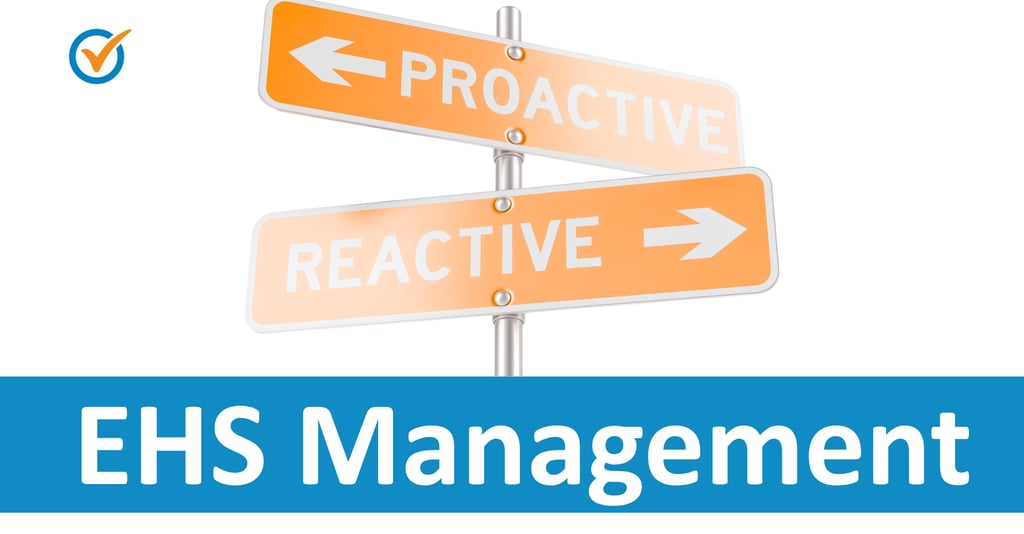
Reactive EHS management doesn't actually save money. It defers the cost and lets it grow in the meantime. The operators who've figured this out, many of them after an incident they'd rather not repeat, are the ones now putting real resources into prevention.
If that pattern sounds familiar, you're in good company. Here's what reactive EHS really costs once you put numbers to it, and why getting ahead of it is more achievable than it might feel.
What "Reactive" Actually Looks Like
Reactive EHS has a recognizable shape. There's no documented program, or one exists on paper but nobody's actively running it. Audits happen after something goes wrong rather than on a schedule. Compliance gaps get addressed when a regulator flags them, not when an internal review catches them first. And responsibility is spread thin enough that everyone owns EHS in theory, which usually means no one owns it in practice.
This is incredibly common, especially for teams stretched across a lot of properties. It isn't a sign of negligence. It's what happens when EHS competes with everything else for attention. The catch is that it tends to be far more expensive than the alternative.
The Direct Costs That Rarely Make the Budget
Workplace injuries. The numbers here are larger than most operators expect. The Institute for Work and Health, using Workplace Safety and Insurance Board (WSIB) data, estimates that a single lost-time injury costs a Canadian employer somewhere between $117,000 and $234,000, depending on the sector. Only a portion of that is direct cost like WSIB premiums and wage top-ups, roughly $39,000 to $78,000. The larger share is indirect: hiring and training a replacement, lost productivity, investigation time, and administrative work. In other words, the costs you can't see usually run about double the ones you can.
Regulatory penalties. Under Ontario's Occupational Health and Safety Act, a corporation convicted of an offence can be fined up to $2 million per offence, with directors and officers personally exposed to fines of up to $1.5 million and as much as 12 months in jail. A second offence that causes death or serious injury within two years now carries a mandatory minimum fine of $500,000. Other provinces carry comparable authority. And the fine is rarely the end of it, because an inspection that follows an incident often surfaces further violations.
Stop-work orders. A stop-work order on an active renovation or construction project doesn't just pause the work. It can trigger contractor delays, liquidated damages, re-mobilization costs, and in commercial properties, tenant disruption that strains lease relationships. These orders are not rare in Canada. In residential construction alone, Ontario's Ministry of Labour issued more than 5,600 stop-work orders between April 2023 and December 2024.
Insurance. Incidents create claims, claims drive premiums, and a pattern of incidents, even small ones, affects both your insurability and the terms you're offered. This one moves slowly and rarely shows up in an incident post-mortem, but it compounds year over year.
The Costs That Never Land on an Invoice
Beyond the direct exposure, reactive EHS creates costs that are harder to put a number on but every bit as real.
Tenant confidence. For property managers and commercial landlords, how a building is run is a material part of the relationship. A serious incident, a stop-work order that spills into a tenant's space, or a recurring complaint about air quality or hazardous materials adds friction at renewal time, and that friction has a way of turning into vacancy.
Transaction risk. In Canadian commercial real estate deals, EHS compliance history gets more scrutiny in due diligence every year. Undisclosed environmental liabilities, a documented pattern of non-compliance, or gaps in hazardous materials management can reshape deal terms, or end a transaction altogether.
Management bandwidth. Incident response is expensive in ways that never touch the EHS budget. A serious event pulls senior people into investigation, regulatory communication, legal review, and operational recovery. Those are hours nobody planned for, because nobody plans for the unplanned.
The Proactive Math
Now set that against what a well-run, proactively maintained EHS program actually costs.
For most commercial properties and mid-size industrial operations, a comprehensive program that is documented, actively managed, and regularly audited runs a fraction of the cost of a single serious incident. It covers regular reviews, compliance tracking, documented training, and audit cycles that find and close gaps before they become events.
The return isn't theoretical. When prevention costs a fraction of one lost-time injury, the case largely makes itself. The real question is whether the people holding the budget can see that connection clearly enough to act on it before circumstances force the issue, and that's a question worth raising early.
What Changes When EHS Is Managed Proactively
Operators who've made the shift from reactive to proactive tend to report the same things: fewer incidents, smoother regulatory inspections, lower insurance costs over time, and far less senior bandwidth lost to crisis mode.
The benefit that gets talked about least, though, is confidence. When your programs are documented, your obligations are tracked, your audit cycle is current, and your team knows exactly what to do, there's a clarity that shows up everywhere. In tenant conversations. In investor due diligence. In your regulatory relationships. In how a property trades.
Compliance confidence isn't really about avoiding problems. It's about running a better operation, and feeling that you are.
A Practical Starting Point
If your program leans more reactive than proactive, the first move is usually an honest baseline. That means an independent look at your current documentation, your compliance obligations property by property, and the gaps between what you're required to have and what you actually have in place.
That picture isn't always comfortable to sit with. But it's a lot easier to face on your own schedule than after an incident sets the timeline for you. And once you can see it clearly, it becomes something you can plan around.
RiskCheck Inc. provides EHS consulting, compliance management, and hazardous materials services for commercial real estate and industrial operators across Canada. riskcheckinc.com
Sources for the figures above
Lost-time injury cost ($117,000–$234,000; direct $39,000–$78,000): Institute for Work and Health, using WSIB data, as cited by OSG, "Understanding the ROI of Health and Safety." https://osg.ca/understanding-the-roi-of-health-and-safety/
OHSA fines ($2M corporation; $1.5M directors/officers; $500K mandatory minimum): Government of Ontario, "Guide to the Occupational Health and Safety Act, Part IX: Offences and penalties." https://www.ontario.ca/document/guide-occupational-health-and-safety-act/part-ix-offences-and-penalties
Stop-work orders (5,600+ in residential construction, Apr 2023–Dec 2024): Ontario Ministry of Labour construction health and safety program data.
Get in touch for expert risk management and compliance support
© 2026. All rights reserved.