
When the Skies Clear, Is the Air Inside Your Building Actually Clean?
Everyone last week in Toronto was looking up. Building owners and facilities managers should be looking in. Outdoor air quality events don't stay outdoors. HVAC systems pull that same smoke-laden air inside, and ventilation gaps let fine particulates linger long after the skies clear. Here's what Indoor Air Quality actually means for your building — and how to know what your occupants are really breathing.
HAZMAT
7/20/20263 min read
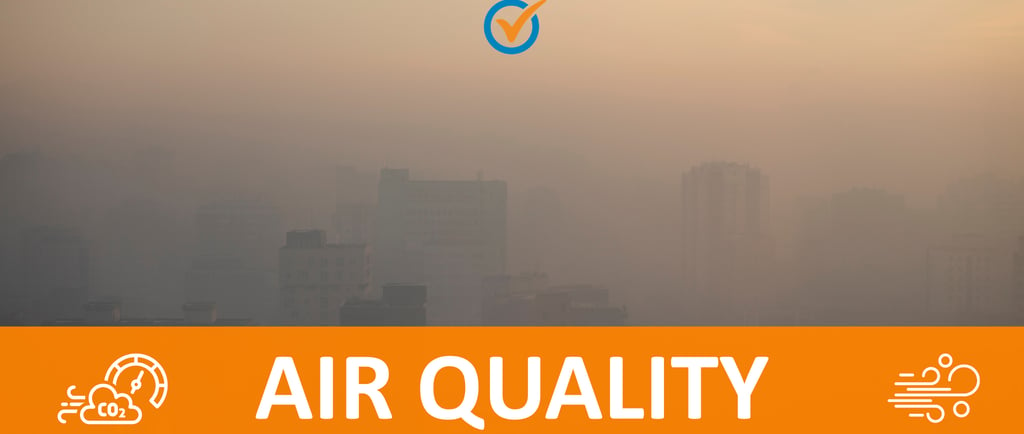
For two days in mid-July, Toronto had the worst air quality of any major city on earth... Smoke from more than 100 active wildfires in northern Ontario drifted south, turning the skies over the GTA an eerie yellow-orange and pushing Environment Canada's Air Quality Health Index to 10+, its highest "very high risk" category. The smoke didn't stop at the city limits either; it crossed the border and degraded air quality as far as Pennsylvania, New York, and New England.
It was, understandably, the story of the week. But almost all of that conversation was about the air outside. Far fewer people asked the question that matters just as much for building owners and operators: what happens to that air once it reaches your HVAC intake?
Why This Is an Indoor Problem, Too
Wildfire smoke events like the one Ontario just experienced are becoming a more regular feature of Canadian summers. When outdoor air quality degrades sharply, three things typically happen inside buildings that aren't actively managing for it:
HVAC systems draw the smoke in. Standard ventilation pulls outdoor air inside to meet fresh-air requirements. Without adequate filtration (MERV-13 or better is generally recommended during smoke events), fine particulate matter (PM2.5) from wildfire smoke moves directly into occupied space.
Older or leaky building envelopes let it in anyway. Infiltration through doors, windows, and unsealed penetrations means smoke can enter even buildings with no active air intake open.
Particulates linger. Once PM2.5 settles into carpets, HVAC ductwork, and furnishings, it can continue to affect indoor air quality for days or weeks after the outdoor skies have cleared — not just for the news cycle.
The wildfire smoke event is a dramatic, visible reminder of something that is true year-round: what's in the air inside your building is not automatically clean just because the smoke has passed.
What Indoor Air Quality Actually Covers
Indoor Air Quality (IAQ) focuses on the health and comfort of building occupants by assessing and managing air conditions within indoor environments. Poor air quality can result from pollutants, ventilation issues, or hidden contaminants — wildfire smoke infiltration, mould growth, off-gassing from building materials and furnishings, inadequate fresh-air exchange, or elevated CO2 from underventilated spaces.
The effects range from immediate discomfort — headaches, eye and throat irritation, fatigue, reduced concentration — to longer-term health concerns tied to chronic exposure, particularly respiratory and cardiovascular effects associated with fine particulate matter.
The Ontario Picture
IAQ isn't a niche concern in Canadian commercial real estate — it sits squarely inside existing duty-of-care obligations:
Under Ontario's Occupational Health and Safety Act, employers have a general duty to protect workers from workplace hazards, and indoor air quality that falls short of recognized standards is a measurable one.
Ventilation design across Canada is generally benchmarked against ASHRAE 62.1, the ventilation standard referenced by the National Building Code of Canada.
Tenant and employee expectations around air quality have risen steadily since 2020, and wildfire seasons like this one only accelerate that shift. Property managers are increasingly fielding occupant questions about what's being done to protect indoor air — questions that are far easier to answer with data than with reassurance.
Our Services Include
Assessments — targeted testing and analysis to identify pollutants, ventilation gaps, and hidden contaminants affecting a space.
Building Certification Programs — support for IAQ-related components of green building and wellness certification requirements.
Emergency Response to Occupant Concerns — rapid assessment when occupants raise health or comfort concerns, including during smoke events or after water damage.
Spot Measurements or Long-Term Sampling — point-in-time testing for immediate answers, or extended sampling to establish a reliable baseline over time.
A Practical Starting Point
This wildfire season won't be the last time outdoor air quality puts pressure on what's happening inside Ontario buildings. A baseline IAQ assessment — done now, while the topic is front of mind for tenants and occupants — gives building owners and operators a clear, documented answer the next time someone asks what's in the air.
RiskCheck's Hazmat team provides Indoor Air Quality assessments and testing for commercial properties across Ontario and Canada.
Get in touch for expert risk management and compliance support
© 2026. All rights reserved.